
By Isaac Bennett, Owner, Bennett Lawn and Landscape | Updated July 2026
Key Takeaways
-
- Interlock pavers are manufactured for consistent size and durability.
- Natural stone offers a unique look that’s impossible to replicate.
- Cost variations depend mainly on labour intensity and material sourcing – see real pricing below.
- Both materials need specific care to handle Ottawa’s freeze-thaw winters.
- Professional installation, not the material itself, is usually what determines whether a surface lasts 10 years or 30.
Interlock vs Natural Stone: What’s the Real Difference?
The debate between interlock and natural stone comes down to a trade-off: manufactured consistency versus raw, organic character. At Bennett Lawn and Landscape, a top landscaping company Ottawa homeowners trust, we get asked to weigh in on this decision almost every week during spring and early summer – and the honest answer is that it depends less on which material is “better” and more on what the surface has to do for you day to day.
Interlock, made of concrete pavers, is engineered for predictability. Its size and strength are consistent from piece to piece, which makes it a reliable choice for high-traffic areas like driveways and front walkways. Because the units are manufactured to exact specifications, installation is generally faster and easier to schedule than working with earth-mined stone.
Natural stone taps into the geological history of the material itself. Whether it’s the rustic texture of flagstone or the polished look of finished granite, every piece carries its own variation in colour, vein, and texture. That character comes at the cost of a slower, more hands-on installation, since no two pieces fit together exactly the same way twice.
What Is Interlock Paving?
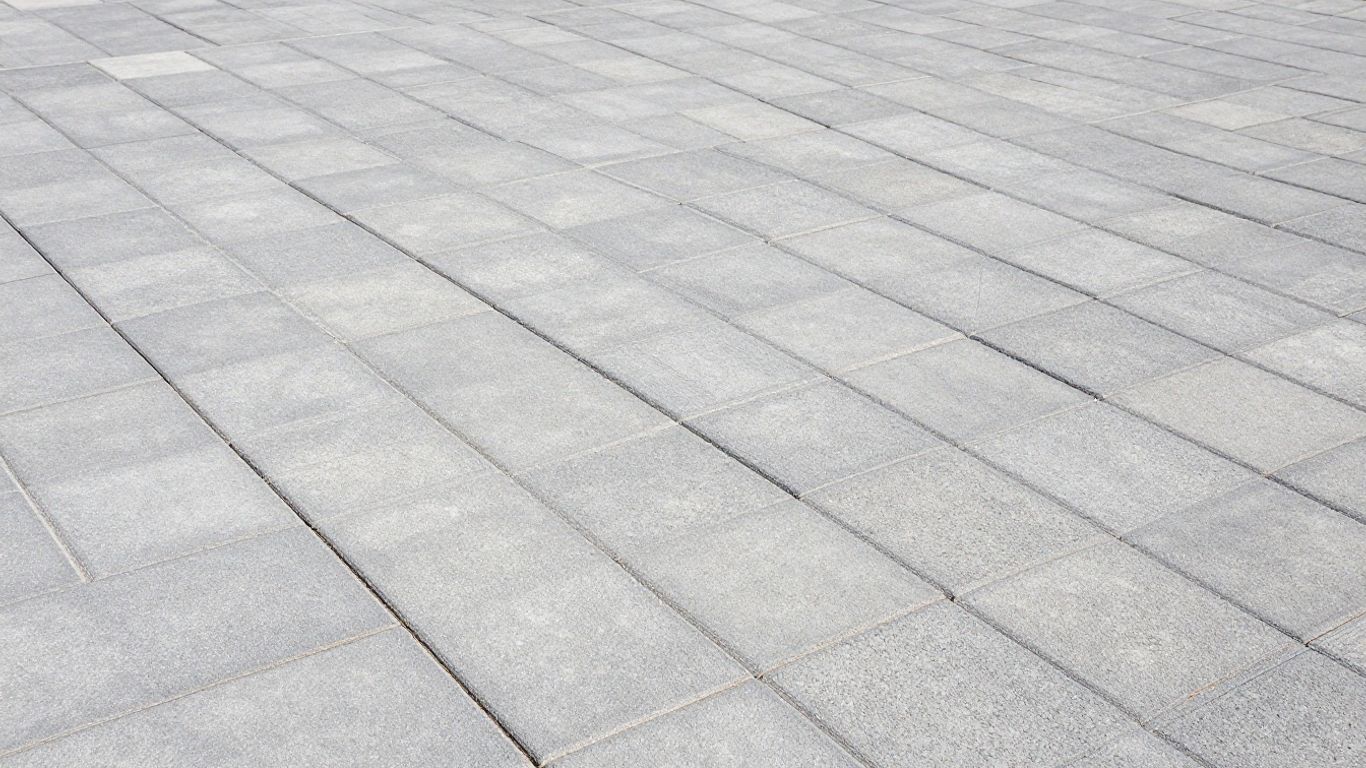
Interlock paving is a system of individual concrete units laid on a compacted base and locked together with jointing sand. The modular design lets the surface flex slightly with minor ground movement instead of cracking – which matters a lot here, given how much our soil shifts between January and April.
Because these pavers are manufactured rather than quarried, each piece is virtually identical to the next, which lets our crews hold tight, crisp pattern lines on driveways and walkways. Many homeowners choose interlock specifically for the benefits of installing backyard interlock – the range of finishes available makes it easy to match a paver colour to existing siding, trim, or brickwork.
What Is Natural Stone?
Natural stone covers a range of materials harvested from the earth, most commonly flagstone, granite, and limestone in this region. Each carries its own physical properties – the slate-like layering of flagstone, or the dense, crystalline hardness of granite.
Unlike concrete pavers, natural stone is defined by its imperfections. No two stones are exactly alike, and that irregularity is the entire appeal for homeowners chasing a one-of-a-kind, gradually-weathering look rather than a uniform finish.
Working with it takes more on-site judgment – selecting, test-fitting, and sometimes hand-shaping each piece to match its neighbours. It’s slower work, but it’s what gives a natural stone patio the kind of depth that feels like part of the landscape rather than something laid on top of it.
Flagstone vs Interlock: Key Differences
The fundamental divide between these two materials lies in their manufacturing and structural nature. While interlock is created to be perfectly uniform, flagstone varies in thickness and shape, which mandates a specific type of high-quality installation. We can break down the primary differences using this comparison table.
| Feature | Interlock Pavers | Natural Stone |
|---|---|---|
| Consistency | High uniformity | Highly irregular |
| Cost | More budget-friendly | Higher investment |
| Installation | Faster, standardized | Labor-intensive, custom |
| Durability | Excellent for driving | Best for walking |
As the table above suggests, your choice often depends on the specific use of the area. For a driveway installation, the heavy-duty nature and predictable dimensions of interlock make it a preferred choice for most. If you are designing an intimate garden path where artistic flow is the primary concern, the raw beauty of natural rock provides a superior aesthetic finish.
In many cases, the decision between flagstone vs interlock comes down to your personal values regarding project goals. If you prioritize long-term efficiency and structural consistency, you will likely favor the concrete route. If you value unique craftsmanship and are willing to invest in a bespoke look that evolves beautifully as it weathers, you will likely lean toward the natural route.
Cost Comparison: Interlock vs Natural Stone in Ottawa
Real numbers matter more here than general “cheaper vs. pricier” statements, so here’s what our own published pricing actually looks like:
- $4,500–$15,000 typically covers smaller interlock walkways, front entrances, or modest patio areas.
- $15,000–$25,000 is the range most mid-size interlock driveways and larger patio or natural stone walkway projects fall into.
- $25,000+ is where larger driveways, premium natural stone patios, and combination hardscape projects usually land, driven by material sourcing, cutting, and site prep.
Interlock tends to sit at the lower end of these tiers because standardized paver sizes mean less cutting and faster, more predictable labour hours. Natural stone projects push toward the higher tiers because of the sourcing, sorting, and hand-fitting involved – a rare or imported stone, or a project requiring extensive custom cuts, adds cost quickly. For what specifically drives interlock installation costs in Ottawa, we’ve broken down the full list of factors separately.
Durability & Lifespan
Both materials are built to last, but they age differently depending on traffic, weight, and exposure.
How Ottawa’s Freeze-Thaw Winters Affect Each Material
Ottawa’s clay-heavy soil and deep freeze cycles are hard on rigid surfaces. On a driveway we installed in Barrhaven a few winters ago, the client’s old poured-concrete apron had cracked in three places by its second winter – the interlock replacement we put in has gone four winters without a single crack, because the jointing sand method lets the surface flex slightly instead of fighting the frost. Learn more about how frost heave damages interlock stonework and how correct base depth prevents it – we typically compact 6 inches of granular base under driveways and 4 inches under patios and walkways, which is below Ottawa’s average frost penetration depth for a properly graded site.
Natural stone, particularly denser options like granite, resists weather-related decay well over the long term. The key variable for both materials isn’t the stone itself – it’s whether the sub-base was compacted and drained properly before a single piece was laid.
Maintenance & Repairs Compared
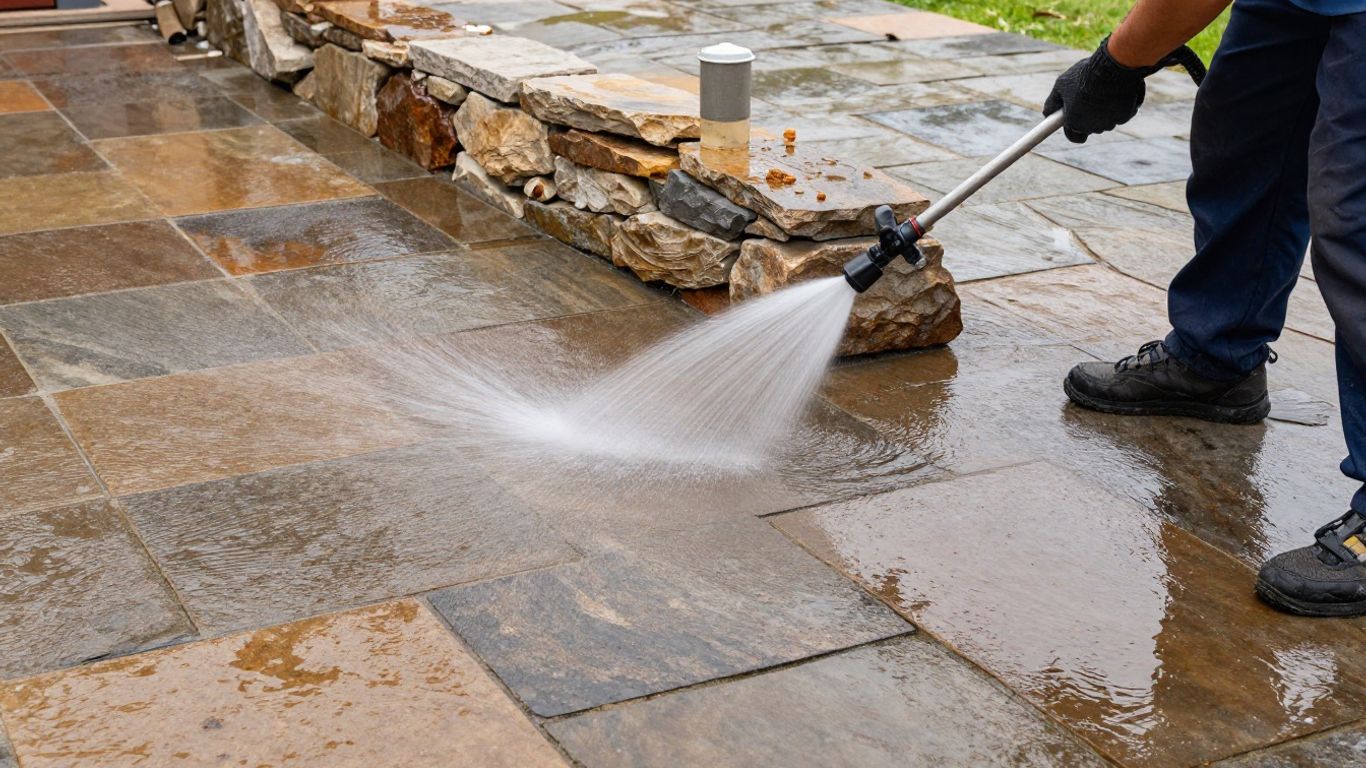
Interlock maintenance is mostly routine: sweeping in fresh polymeric sand every 3–5 years to keep the joints locked and weeds out. Natural stone has different upkeep needs given its greater surface porosity – sealing every few years helps prevent staining, especially on lighter-coloured limestone.
When a repair is needed, interlock has a real advantage: our interlock repair services in Ottawa can lift and replace individual faulty pavers without disturbing the surrounding surface. For a complete seasonal care routine, see our guide to maintaining interlocking paving stones. In the meantime, the basics:
- Sweep away loose debris to prevent grit accumulation.
- Top up joints with polymeric sand every 3–5 years.
- Use a low-pressure wash for seasonal stains – high pressure can strip jointing sand or dull stone sealant.
- Check for uneven settling every spring, once the ground has fully thawed.
Aesthetic & Design Options
Beyond performance, the look and feel of your outdoor space matters just as much – this is often where custom landscape design services in Ottawa really come into play. Here’s how each material lets you express your own style.
Interlock Patterns, Colors & Textures
Interlock offers a wide range of design flexibility – modern linear layouts, classic herringbone, or patterns that mimic historical cobblestone. Because it’s manufactured, colour stays consistent across large surface areas, which matters for keeping a driveway and front walkway looking cohesive. See our guide to choosing interlock patterns for Ottawa’s clay soil for pattern options that hold up best against our ground movement specifically.
Natural Stone’s Organic, One-of-a-Kind Look
Natural stone brings a kind of warmth that’s genuinely difficult to replicate with a manufactured product – the subtle mineral shifts in the stone read differently depending on the light and time of day. Browse our project gallery for real examples from Ottawa-area backyards.
Installation Process: What to Expect
Regardless of material, the outcome of the project depends almost entirely on base preparation. Our hardscape team starts by excavating native soil to the required depth, then rebuilds it in compacted layers of granular base – a non-negotiable step given how much Ottawa’s clay soils shift with moisture.
Once the base is level and compacted, interlock installation moves faster because of the uniform paver size, while natural stone requires a slower, hand-fitted approach piece by piece. The last step – locking the joints – is what gives the surface its horizontal hold under traffic. On a recent walkway project in Kanata, skipping ahead on base compaction to save a day would have meant redoing the whole thing by the following spring; it’s the step clients notice least and the one that determines whether the job lasts.
Best Uses: Patios, Walkways & Driveways
For high-traffic driveways where structural integrity is the priority, interlock’s modular design distributes vehicle weight more evenly than large-format stone slabs, without buckling.
For a private patio, or a quiet stone walkway to a garden shed, natural stone tends to be the better fit for atmosphere – it integrates more naturally with surrounding softscaping and garden beds.
Many homeowners blend both: interlock for the driveway and entrance, natural stone or a custom patio installation for the backyard. It’s a practical way to put budget where it matters structurally while still getting the premium look where it’s seen up close.
Which Option Adds More Resale Value?
A well-maintained interlock driveway or front walkway signals low-maintenance reliability to a buyer and rarely raises concerns during a home inspection. A well-executed natural stone patio, on the other hand, can be a genuine selling feature – but only if it’s installed well; a poorly-fitted stone surface reads as neglect rather than upgrade.
The safest rule for resale value: match the scale of the investment to the scale of the house and neighbourhood. Over-improving a modest property with an elaborate custom stone patio rarely returns what it cost.
Interlock vs Natural Stone: Our Recommendation for Ottawa Homeowners
Isaac Bennett and the team here have installed both materials across the Ottawa area for years, and in our experience the right answer depends on tolerance for long-term maintenance more than budget alone. For most homeowners, interlock is the workhorse – reliable, cost-effective, and built to handle our winters without drama. We recommend it as the default for any high-traffic surface or driveway.
Where it makes sense to spend a little more, natural stone earns its place as a focal point – a front entrance, a garden path, a feature patio – while interlock handles the broader, functional areas. That combination usually gives homeowners the best of both without blowing the budget.
Whichever material you choose, the base and drainage work underneath it is what determines whether it’s still looking good in year 15. Don’t let that part get shortcut on quote comparisons.
Conclusion
Choosing between interlock and natural stone comes down to how you’ll use the space, your budget, and how much long-term care you’re willing to put in. Done right, either material – or a mix of both – gives you an outdoor space that holds up to Ottawa winters and looks good doing it.
Not sure which is right for your property? Get a landscaping quote from Bennett Lawn and Landscape, or call us directly at (613) 795-2017 – we’ll help you choose the material that fits your budget, style, and how you actually use the space.
Frequently Asked Questions
Is natural stone more susceptible to cracking than interlock?
Yes, generally. Natural stone is more rigid, so if the ground beneath it shifts significantly – which happens with Ottawa’s clay soils during freeze-thaw – it can crack. Interlock’s modular, sand-jointed design allows individual pavers to move slightly without failing, which is why we recommend it more often for driveways specifically.
Can I install both interlock and natural stone in one project?
Yes – it’s actually one of the more common requests we get. A typical combination uses interlock for the driveway and main walkway (higher traffic, needs structural consistency) and natural stone for a backyard patio or garden path (lower traffic, prioritizes look and feel).
Does Ottawa’s climate require special preparation for either material?
Yes, for both. We compact roughly 6 inches of granular base under driveways and 4 inches under patios or walkways, with proper drainage sloped away from the home. Skipping this step is the single biggest cause of the cracking, sinking, and heaving we get called out to repair.
How often does polymeric sand need to be replaced for interlock?
Every 3–5 years under normal Ottawa conditions, sooner in high-traffic driveway joints. You’ll know it’s time when you start seeing weed growth between pavers or the joints look visibly low.
Can I pressure wash both types of materials?
You can, but use a low-pressure setting on both. High pressure will blast polymeric sand out of interlock joints (undoing the maintenance you just did) and can strip sealant or etch softer stones like limestone.
Which material is better for a steep driveway?
Interlock, in most cases. Its modular interlocking design provides better horizontal stability under vehicle weight and grade than large-format stone slabs, which are more prone to shifting on a slope.
Does natural stone need to be sealed?
Not always, but we recommend it for patio areas – especially lighter stones like limestone – where furniture, food, or leaf tannins are likely to leave stains. Sealing also helps limit the seasonal darkening natural stone can show after a wet spring.