
By Bennett Lawn & Landscape Team | Reviewed by Isaac Bennett | Updated August 2026
Key Takeaways
Water pooling in your backyard or yard is usually linked to clay soil, low spots, poor grading, or poorly directed downspouts. The right fix depends on where the water comes from, how long it remains, and whether it threatens your home.
- Ottawa’s clay soil can drain slowly, especially when compacted.
- A yard should generally guide water away from the foundation.
- Short-lived puddles after a major storm may be normal.
- French drains, regrading, swales, and dry wells solve different drainage problems.
- Persistent pooling near the house deserves a professional assessment.
What Causes Water Pooling in Backyard Spaces in Ottawa?
Water pooling in backyard areas is rarely caused by one thing alone. Rain may collect in a naturally low section, run off a hard surface, or meet soil that cannot absorb it quickly enough. In Ottawa, seasonal frost, compacted ground, and heavy clay can make the pattern more noticeable from spring through fall. Before choosing a solution, it helps to trace the water’s path rather than simply filling the puddle.
Ottawa’s Clay Soil vs. Other Regions
Ottawa’s clay soil holds water more readily than loose, sandy soil, and compaction can reduce its ability to accept rainfall. New construction, vehicle traffic, foot traffic, and repeated mowing when the ground is wet can all close up the soil surface. A lawn may look level while a dense layer beneath it slows infiltration, leaving water sitting after a storm.
Clay is not automatically a drainage failure. A properly shaped yard with healthy soil can still move and absorb a great deal of rain. However, if a low spot combines with compacted clay, the water has few easy routes away. Improving soil structure may help shallow problems, but it will not correct a slope that directs runoff toward the house.
Common Grading and Downspout Mistakes
Grading determines where surface water travels. If the ground slopes toward the foundation, or if a settled area forms beside a patio or walkway, runoff can collect exactly where you do not want it. Downspouts can add to the problem when they discharge beside the house, point toward a low section, or become blocked with leaves and ice.
A useful first step is to watch the yard during and after rainfall. Check whether water arrives from a roof, driveway, neighbouring property, or higher part of the lawn. Homeowners comparing options can also review this lawn grading guide, which explains why levelling and slope should be addressed before other landscaping work.
Water Pooling in Yard After Heavy Rain: Why It Happens
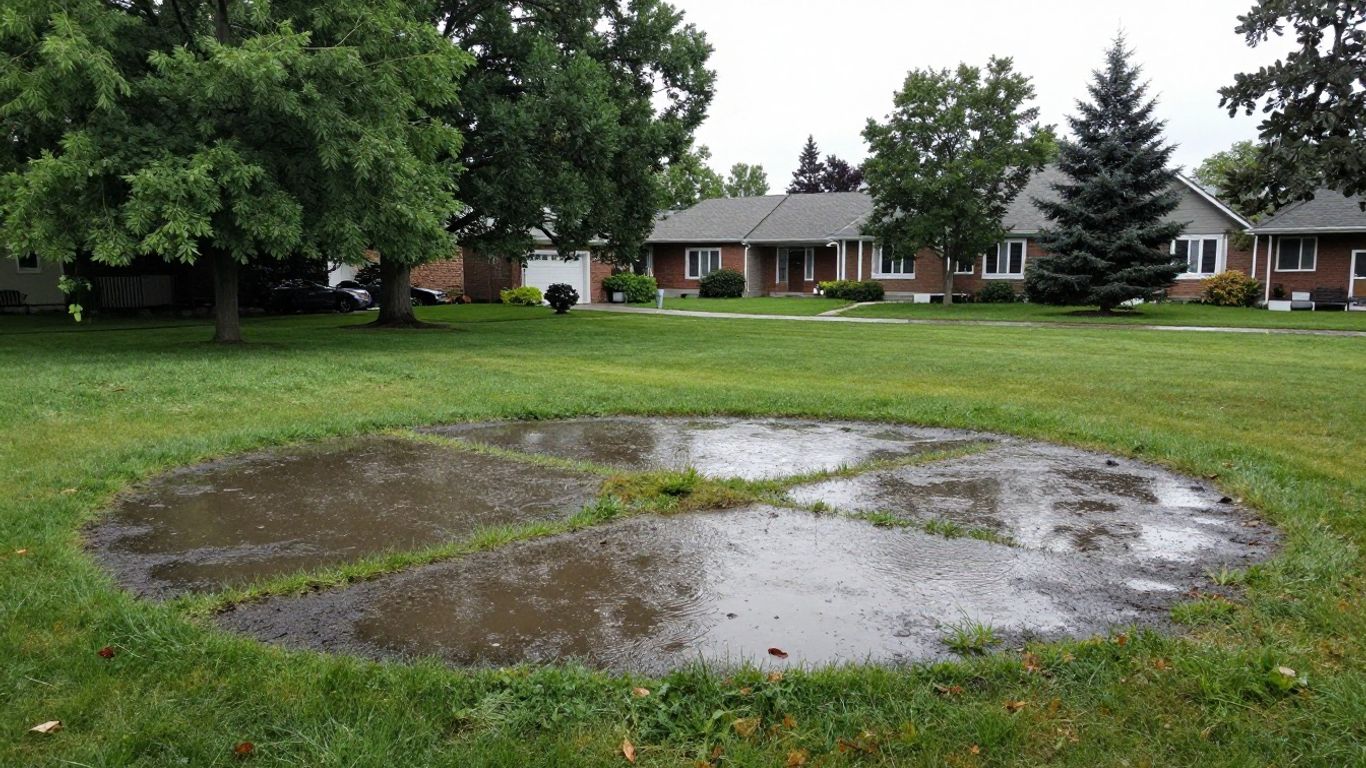
Water pooling in yard areas after heavy rain can be temporary, particularly when a storm drops more water than the soil can absorb at once. Ottawa’s intense summer showers and spring snowmelt can briefly overwhelm otherwise functional drainage. The key is not whether a puddle appears, but how quickly it recedes and where it forms. A pattern that repeats in the same place tells you more than one isolated wet afternoon.
Normal Drainage vs. a Real Problem
A shallow puddle that disappears within a reasonable period and does not touch the foundation may be a normal response to an unusually wet event. Persistent standing water, a widening soggy patch, or water that returns after every moderate rainfall points to a drainage issue. Pay attention to odours, damaged grass, muddy footpaths, and water flowing toward buildings.
This simple comparison can help you decide how urgently to investigate:
| What you observe | Likely meaning | Sensible next step |
|---|---|---|
| Small puddle after an exceptional storm | Temporary surface overload | Monitor how long it takes to recede |
| Same low spot after ordinary rain | Local grading or soil issue | Inspect the slope and soil condition |
| Water beside the foundation | Runoff or drainage risk | Redirect water and arrange an assessment |
| Broad soggy area across the lawn | Larger flow or infiltration problem | Review the whole yard, not only the puddle |
The table is only a starting point; site conditions can overlap. Take photos during rainfall, note the duration, and check downspouts before assuming the lawn itself is the sole cause. For additional general background, this landscaping cost guide discusses common approaches to wet spots, grading, and runoff.
A short video can also make the basic concepts easier to visualize, particularly the difference between surface grading and underground drainage.
Signs You Have a Water Pooling in Yard Problem
Not every wet patch requires excavation, but repeated pooling should not be dismissed. Water pooling in yard spaces can kill turf, soften soil, attract insects, and make parts of the property difficult to use. The location matters as much as the duration: a puddle in the middle of a lawn is different from water collecting against a basement wall. Look for changes over several storms, not only immediately after the rain stops.
Foundation and Mold Risks You Shouldn’t Ignore
Water that remains beside the foundation can increase the chance of dampness, seepage, and damage to nearby landscaping. Inside the home, musty smells, damp baseboards, peeling finishes, or recurring condensation deserve prompt attention. These signs do not prove that yard drainage is the cause, but they are good reasons to investigate the exterior water path.
Other warning signs include soil erosion, exposed roots, sinking areas, and cracks or movement in hardscape near a wet zone. Early investigation can prevent escalation when a small grading defect is easier to correct than a saturated area affecting several parts of the property. If water enters the home, consult the appropriate building or waterproofing professional rather than relying on a lawn repair alone.
Water Pooling in Yard Solutions That Actually Work
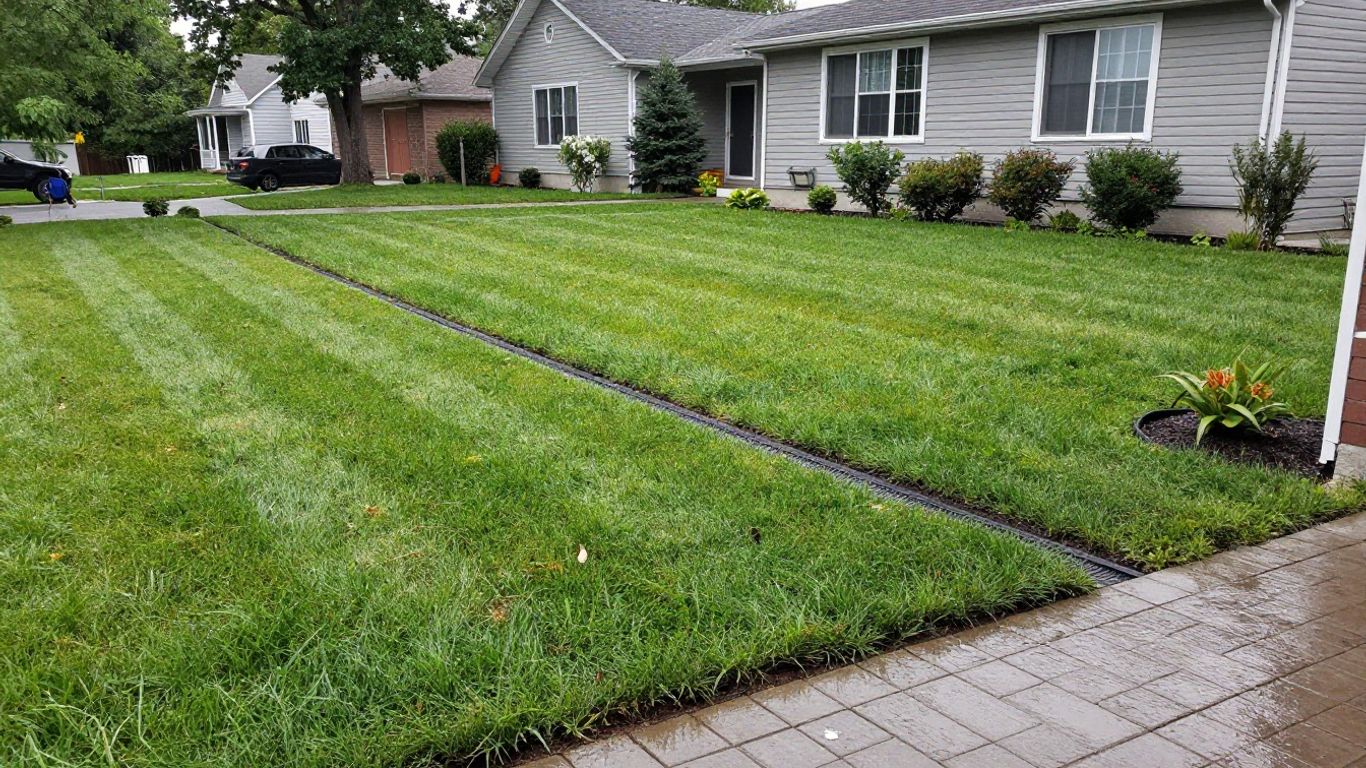
The best water pooling in yard solutions match the intervention to the source. Regrading handles surface flow, while a French drain collects subsurface or concentrated water. A downspout extension may solve a roof-runoff problem without changing the lawn at all. Good drainage design also considers where redirected water will go, so one part of the property is not improved by creating a new problem elsewhere.
Regrading
Regrading reshapes the soil so water can move away from low areas and vulnerable structures. It may involve removing soil, adding suitable fill, compacting it in layers, and restoring the lawn or garden afterward. The slope should be gradual enough to remain usable, but purposeful enough to guide runoff toward an appropriate discharge or collection area.
Regrading is often the right foundation for a larger project, especially when several symptoms point to the same surface-flow problem. It is less useful when the water table is high, the available outlet is blocked, or the underlying soil remains severely compacted without additional drainage work.
French Drains & Catch Basins
A French drain typically collects water through a gravel-filled trench and perforated pipe, then conveys it toward a suitable outlet or dispersal area. Catch basins work at the surface, gathering runoff at a defined low point before it travels through connected drainage piping. The two systems can be used separately or together, depending on whether the main issue is sheet flow, a concentrated stream of runoff, or water moving through the soil.
Design details matter. The trench needs a workable route, the pipe needs the correct fall, and the outlet must not direct water toward a foundation or neighbouring property. A drainage contractor can also identify whether the apparent wet spot is actually fed by several sources.
Dry Wells & Downspout Extensions
A dry well can temporarily receive and disperse roof runoff below grade where site conditions allow it. It is not a universal answer: soil permeability, groundwater, setbacks, and local requirements all affect whether it is appropriate. Downspout extensions are simpler and may be enough when gutters are sending concentrated water directly beside the foundation.
Start with the roof system before investing in a larger lawn project. Clean gutters, confirm that downspouts are connected, and observe the discharge during rain. If the extension only moves water to another low point, the wider drainage plan still needs attention.
Permeable Interlock & Swales
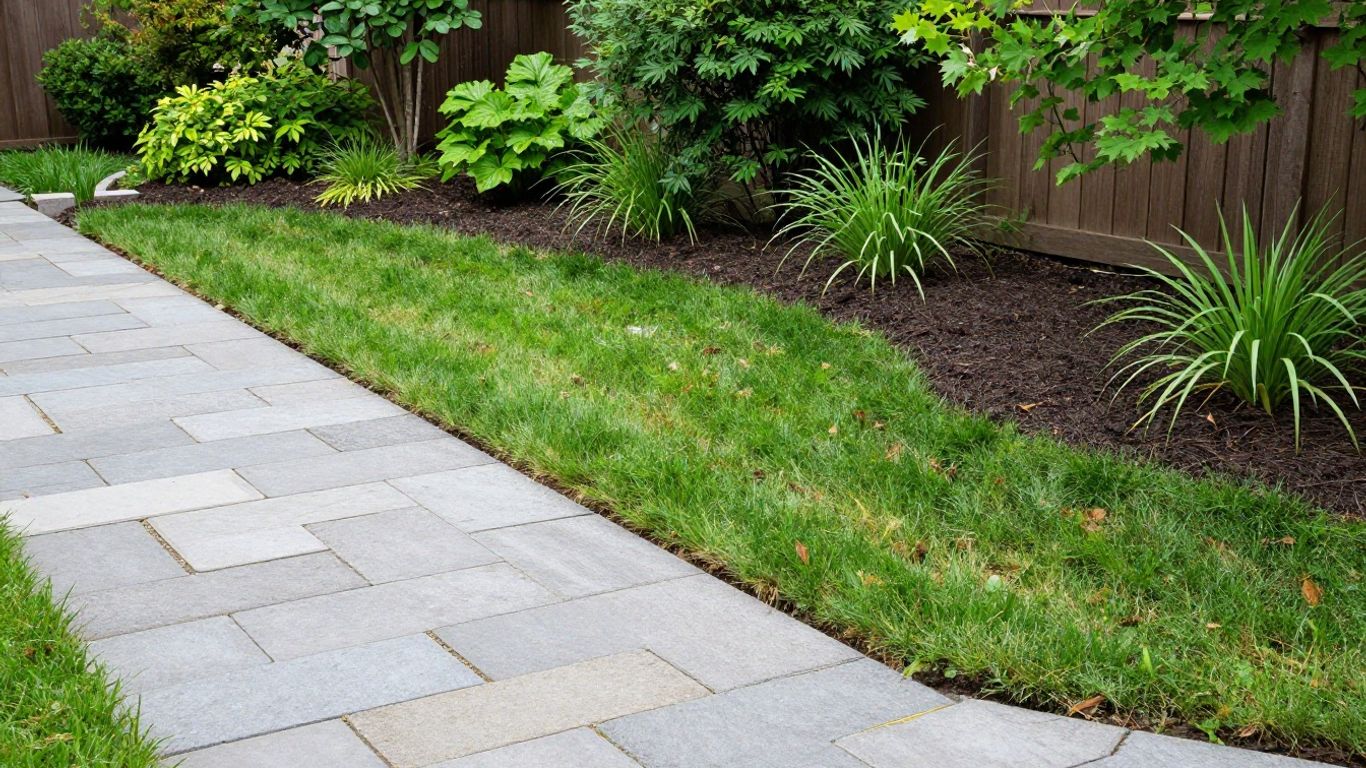
Permeable hardscaping can reduce surface runoff where a patio or walkway is contributing to the problem, provided the base and surrounding drainage are designed correctly. A swale is a shallow, shaped channel that guides water across the property while slowing it and allowing some infiltration. Both options can be practical, but neither should be installed without understanding the existing grade.
For Ottawa projects, proper base preparation and drainage are especially relevant to hardscaping in clay soil. This guide to interlock patterns for clay soil explains why pattern choice, excavation, granular base, and edge restraint affect performance through freeze-thaw cycles. The hardscape should support the drainage plan, not block a route that water previously used.
DIY Fixes vs. When to Call a Professional
Some drainage checks are straightforward, while others involve excavation, buried utilities, property boundaries, or changes to how water leaves the site. A careful homeowner can gather useful information before calling for help. The goal is to identify the source safely, not to start digging based on the shape of one puddle.
What You Can Try Yourself
Begin with low-risk observations and maintenance. Make sure gutters are clear, downspouts are connected, and water is not being discharged immediately beside the house. You can also inspect the lawn for obvious depressions and note whether the problem appears only after exceptional rainfall or after ordinary showers.
A sensible first-pass checklist includes:
- Photographing the wet area during and after rainfall.
- Checking gutters, downspouts, and visible extensions.
- Removing leaves or debris from surface drains.
- Avoiding mowing or driving over saturated soil.
- Marking the duration and size of the puddle after each storm.
These steps can prevent a blocked outlet from being mistaken for a major landscape failure. They also give a professional clearer information if the water pooling in the backyard problem continues.
What’s Not a DIY Job
Deep regrading, French drains, catch basins, and dry wells are not simple weekend fixes when they affect the foundation or property drainage. Digging without locating buried services can be dangerous, and sending runoff onto a neighbour’s lot or toward the street may create a separate compliance issue. Ottawa property and stormwater responsibilities are outlined in this municipal bylaw guide, which is worth reviewing before changing drainage routes.
Call for an assessment when water remains for days, the foundation is involved, several drainage features are failing, or the proposed work needs substantial excavation. A professional can evaluate grades across the property and select a solution that addresses the flow rather than hiding the symptom.
Our Process for Fixing Yard Drainage Problems in Ottawa
At Bennett Lawn & Landscape, the starting point is the site itself: the yard’s grades, soil conditions, drainage patterns, and the location of wet areas. The company is an Ottawa landscaping company that prioritizes proper groundwork and addresses common issues such as poor drainage and clay soil. That initial review helps separate a surface low spot from a broader runoff problem.
Bennett Lawn & Landscape’s documented residential landscaping services include soil preparation and drainage solutions, so the recommended work can be considered alongside the rest of the landscape rather than as an isolated patch. The scope may involve improving the ground shape, correcting water flow, or planning drainage features suited to the property. The practical details depend on what the site inspection shows.
The work is then planned around a solid foundation, with attention to the existing landscape and the conditions that caused the pooling. Bennett Lawn & Landscape serves Ottawa-area communities including Barrhaven, Stittsville, Nepean, and Kanata, where clay soil and freeze-thaw conditions can affect outdoor projects. Once the cause and scope are clear, the homeowner can make a better-informed decision about the right repair.
Conclusion
Water pooling in backyard spaces is a signal to study the movement of water, not simply a cosmetic annoyance. Watch how long puddles remain, check the grading and downspouts, and choose a solution that gives runoff a safe destination. Small maintenance steps may help, but recurring or foundation-adjacent water deserves a considered drainage plan.
Need Help Fixing Water Pooling in Your Backyard?
Standing water is usually a sign of an underlying drainage or grading problem, not something that will disappear on its own. Addressing the cause early can help protect your lawn, garden beds, hardscaping, and even your home’s foundation from ongoing water damage.
At Bennett Lawn & Landscape, we assess your property’s grading, drainage patterns, and soil conditions to recommend a long-term solution—not just a temporary fix. Whether your yard needs regrading, improved drainage, sod replacement, or a complete landscape redesign, our team is here to help.
Call 613-795-2017 or visit our Contact Page to book your free consultation and find the right solution for your Ottawa property.
Frequently Asked Questions
How long is it normal for a yard puddle to remain after rain?
The answer depends on the storm, soil, season, and location. A puddle that repeatedly remains long after ordinary rainfall, especially in the same low spot, suggests that the yard should be assessed.
Can clay soil cause water pooling in backyard areas?
Yes. Clay can absorb water slowly, particularly when it is compacted or combined with a low point. Improving soil may help, but it cannot replace proper grading where the slope is directing water toward the area.
Should downspouts discharge beside the foundation?
Generally, concentrated roof water should not be released immediately beside the foundation. Downspouts should direct water to a suitable location, while extensions or other drainage measures may be needed depending on the property.
Are French drains suitable for every wet yard?
No. A French drain needs an appropriate route, outlet, and surrounding conditions. If the water has nowhere safe to go, installing a trench alone may not solve the problem.
What is the difference between a catch basin and a French drain?
A catch basin collects water at the surface, usually at a defined low point. A French drain generally collects subsurface or surface-adjacent water through gravel and perforated pipe. They can sometimes work together.
Can a swale help with water pooling in yard areas?
A properly shaped swale can guide and slow runoff across a property while supporting infiltration. Its effectiveness depends on the available slope, soil, outlet, and relationship to buildings and neighbouring properties.
When should I hire a drainage professional?
Seek professional help when pooling is persistent, close to the foundation, spread across multiple areas, or connected to substantial excavation. An assessment is also wise when DIY changes could redirect water beyond your property or affect buried services.